February 9, 2026
Selecting the right jointing solution
Whilst taping and jointing materials are not the first consideration when fitting insulated plasterboard, they do play a vital role in overall installation quality, performance and final appearance. Here, Stacey Booth, Head of Marketing & Portfolio at Okarno, outlines the key factors to consider when selecting these products, as there are now more options available than ever before.
Filling joints
Before selecting a joint filling product for insulated or non-insulated plasterboard it’s worth take a moment to evaluate the task at hand. Sometimes the best approach is to ask yourself a few questions:
- Is there access to water on site in case you choose a mix-on-site joint filler?
- Are you considering manual or machine-based application methods?
- Will you have sufficient time and means to handle both mixing and application processes, or would you prefer to concentrate solely on application (in which case a pre-mixed filler might be best)?
These considerations will help determine which jointing solution best suits your requirements because there are now more products to choose from than ever before. To make it easier, some manufacturers offer a jointing selector guide to help you choose the best product for your preferences and project needs.,
Popular brands such as Gyproc provide a guide which breaks down the different stages of jointing and finishing and considers mechanical and hand application.
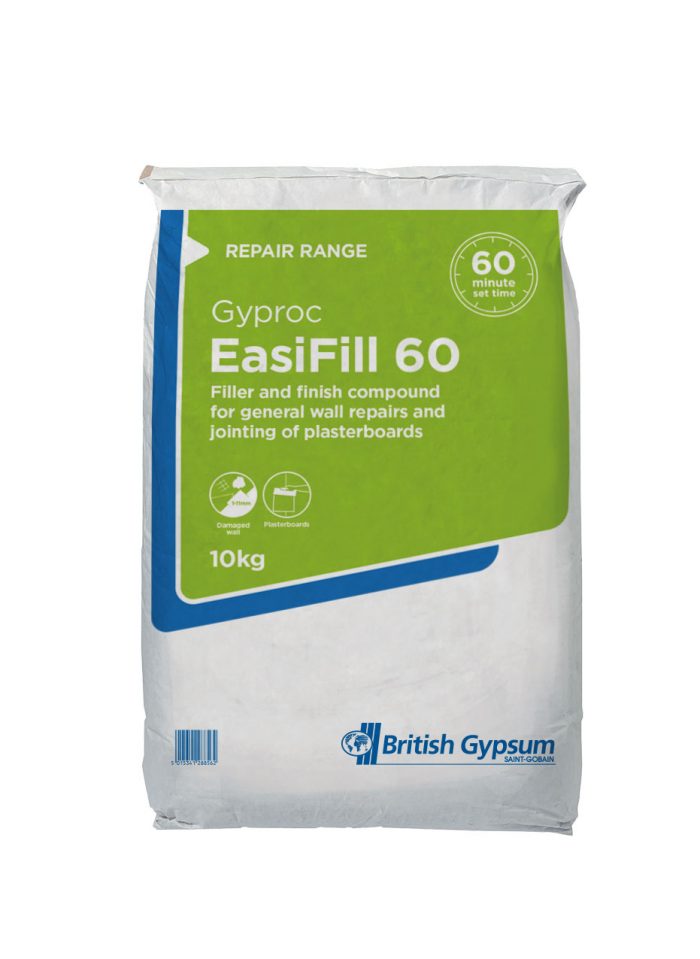
These guides include popular products, such as EasiFill 60, which has become the preferred go-to, multipurpose solution because it is easy to mix and works well with paper and fibreglass jointing tapes. This is a combined setting and air-drying, gypsum-based material for both bulk filling and finishing of joints, which provides high coverage rates and minimal drying shrinkage. One additional benefit is that it’s also suitable for snagging and filling holes; however, it is designed for hand application, so if you are looking for a product for mechanical application, products such as Gyproc® Joint Filler and Quicksand would be a better option.
If you require added convenience, ready-mixed products are also available, saving time, preventing mixing errors and avoiding the need to scrap any unused product. Ready-mixed products come in resealable tubs, so you can use what you need, reseal and then use again on the next job. They are a great option if you are working on a site where access to water is limited.
Paper or fibreglass jointing tape
To effectively join insulated plasterboard, you will need jointing tape to ensure a smooth, crack-free finish. There are two types of jointing tapes: paper-based and fibreglass mesh.
Paper tape provides a strong bond when used with jointing compounds and is effective at minimising cracks where there may be movement between two joints. Paper tapes require a certain skill level to ensure a smooth finish, but they remain a popular choice. Paper-based tape is often less expensive and best suited for those on a budget, but it requires more time to achieve the desired finish.
Fibreglass mesh tape has gained popularity due to its ease of use and flexibility. It is also self-adhesive, allowing for quick application without the need for additional compounds.
Whether you choose paper-based or fibreglass mesh tape is down to preference. However, tape is a key part of ensuring your jointing compound fills and sets properly and can prevent timely, costly rework, so it is worth taking the time to choose a quality tape that matches your project’s needs.
Skimming ready for the final finish
Once the joints between insulated plasterboards have been taped, filled and finished, roller-applied coverings are a good way to get a paint-ready finish, fast.
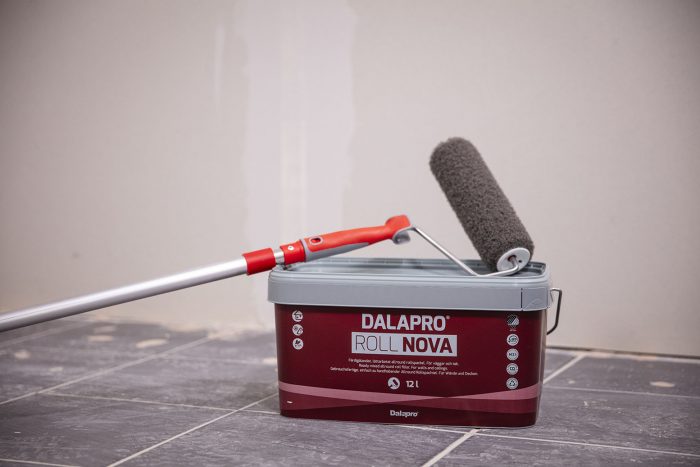
Contractors may find that ready-mixed wall coverings, such as Dalapro Roll Nova, improves project efficiency. Preparation times are typically shorter than with traditional skimming methods, and the average drying time is around eight hours, depending on the thickness of the application and environmental factors such as temperature and humidity.
A roller application method delivers exceptional consistency. The uniform coverage minimises the variations that can occur with hand-applied techniques, helping to ensure that every square metre receives the same level of treatment. Once applied to the surface, use a skimming blade to smooth the compound, to achieve a flawless finish.
Roller applied coverings such as Dalapro Roll Nova come in a 12-litre resealable tub, which means you can load the product straight onto your roller from the tub. Then, when you have finished, reseal the tub and use any remaining product at your next job.
It’s also worth remembering that there are still many situations where traditional wet plastering is essential – particularly for larger-scale repair, maintenance and improvement works, or when working on listed and heritage buildings where original finishes must be preserved. Roller‑applied coverings aren’t designed to replace traditional plastering, but they do offer an additional option that can be highly beneficial depending on the job requirements and resources available.
Products for drywall installation have come a long way in recent years and preparing insulated plasterboard for final decoration has become much simpler due to the variety of products available to meet different needs and preferences.
For more information on joint fillers or Dalapro Roll Nova, visit: www.okarno.com.